Home Blog Page 17

Regulating the production and sale of marijuana: A global perspective

10

The decisions by Colorado and Washington State to legalize the sale of marijuana have set off a wave of speculation about the local, national and international implications. Experts note that even the Netherlands, long known for its permissive culture of marijuana use, has not gone as far as these two states, which have opened up commercial sales to the market with relatively little restriction. These changes are substantial in many ways: Research has suggested that in 2013 alone, when Washington had just decriminalized marijuana — and before commercial sales were permitted — as much as 225 metric tons of cannabis was consumed there. By comparison, somewhere between 50 and 150 metric tons of marijuana is sold in the Netherlands annually.

Some worry about the effects on young people of widespread commercial availability. “Instead of starting with an approach that lent itself more easily to public health protections,” writes Beau Kilmer of the RAND Corporation, “voters in Colorado and Washington jumped right to a market model similar to alcohol.” While scientific research is advancing our understanding of the health risks of marijuana use, randomized control trials — the gold standard of academic research — have yet to be conducted at a scale that would answer every question and concern.

However things play out in Colorado and Washington, it’s evident that the global status quo on the prohibition of the production and sale of marijuana is becoming more unsettled. The recent legal shifts by the United States and Uruguay — it approved the cultivation and sale of marijuana in December 2013 — have been criticized by the United Nations International Narcotics Control Board. Applicable international laws include the 1961 Single Convention on Narcotic Drugs, an amended 1972 version of that convention, and the 1988 United Nations Convention Against Illicit Traffic in Narcotic Drugs and Psychotropic Substances. Nearly all countries are signatories to these conventions and have agreed to punish citizens who violate these principles.

A December 2013 report from RAND, a non-partisan research center, sheds light on how other countries have grappled with marijuana legalization or decriminalization policies. The report, “Multinational Overview of Cannabis Production Regimes” — authored by Kilmer, Kristy Kruithof, Mafalda Pardal, Jonathan P. Caulkins and Jennifer Rubin — looks at case studies in Spain, Belgium and Uruguay, as well as the United States. “While the international treaties related to cannabis have not changed in nearly 25 years, laws and policies pertaining to cannabis have changed in some countries, especially at the state or regional level,” they write. “A number of jurisdictions have reduced their penalties for possessing cannabis for personal use, making the maximum penalty a fine and/or participation in some type of diversion program or community sentence.”

The report’s findings include:

  • Uruguay is the example most parallel to the new scenarios in Colorado and Washington: “Under Uruguayan law, consumption and possession ‘of a reasonable amount of drugs’ for personal use is not penalized.” However, Uruguay is the only country to enact such legal changes at the national level. Statements by government officials there about their obligations to international treaties indicate that Uruguay has chosen to “revise” these existing global rules and pursue an “alternative” framework. (The issue of international law is a complex one that hinges on interpretations of federated systems of government, where regional and local changes may occur, versus national policies.)
  • Belgium and Spain have so far only permitted distribution through “cannabis clubs.” In Belgium, cannabis production is not allowed by law. However, officials have formally put forward law enforcement guidelines that de-emphasize marijuana possession as a crime; they have given it the “lowest possible priority” in terms of prosecution “for possession of up to three grams of cannabis or one cultivated cannabis plant.” Still, members of marijuana organizations have been involved in litigation in recent years.
  • Spain has had a slightly different legal experience: “Following several Supreme Court rulings, the possession and consumption of cannabis is no longer considered a criminal offense, and the jurisprudence in the field has tended to interpret the existing legislation in a way that permits ‘shared consumption’ and cultivation for personal use when grown in a private place. While there is no additional legislation or regulation defining the scale or particulars under which cultivation could be permitted, the Cannabis Social Club (CSC) movement has sought to explore this legal space, reasoning that if one is allowed to cultivate cannabis for personal use and if ‘shared consumption’ is allowed, then one should also be able to do this in a collective manner. In this context, hundreds of CSCs have been established over the past 15 years, but legal uncertainty around the issue of production continues and has led to the seizure of cannabis crops and to the arrest of some CSC members.”
  • As for the legal shifts and international treaty obligations of the United States, the authors note: “In the U.S. there has been very little official discussion about how legalizing the recreational cannabis industry in two states and the subsequent federal response fit or fail to fit within the U.N. drug conventions. After the voters passed the propositions, U.S. Attorney General Holder initially stated that he would consider the ‘international obligations’ when crafting a response. However, neither the subsequent memo from U.S. Deputy [Attorney General] Cole, which described the federal position, nor Cole’s official testimony at a Senate Judiciary Committee hearing about cannabis policy in September 2013 mentioned the international conventions.”

The authors also look at places where medical or scientific use is permitted to varying degrees — such countries include Canada, Chile, Czech Republic, France, Israel, Germany, the United Kingdom and Switzerland — or where “proposals for recreational use have been (or will be) submitted,” including in Chile, Denmark, Portugal and Switzerland.

A 2010 RAND report on the Netherlands, “What Can We Learn from the Dutch Cannabis Coffeeshop Experience?” notes that since 1976 the Netherlands has operated under a “formal written policy of non-enforcement for violations involving possession or sale of up to 30 grams of cannabis.” As of 2010, there were about “700 retail cannabis outlets in the Netherlands — about one per 29,000 citizens (one per 3000 in Amsterdam).” The industry “employs 3,400 workers … and the owners have their own union….  They sell somewhere between 50 and 150 metric tons of cannabis at a value of perhaps 300 to 600 million euros a year.”

Keywords: drugs, marijuana

This article first appeared on Journalist’s Resource and is republished here under a Creative Commons license.

Security Checklist: 11 Simple Steps To Securing Your House

With the high rate of burglaries occurring each day, it is imperative to ensure you’re doing your best to deter them. That would include making sure your house doesn’t appear as an ‘easy’ or vulnerable target.

We talked with experts to assemble a comprehensive checklist that will help you secure your house and make sure you are covering all your bases.

“Home security doesn’t have to be expensive. You can keep your home safe from intruders through simple but very effective steps. Here are some simple and inexpensive yet highly functional ways to do this: 

1. Use Motion-sensing Lights Outside

“Never underestimate the power of motion-sensing lights. They can startle an intruder and cause them to flee in a panic. You can either go with bulbs or detection adapters, as long as they put the spotlight on anyone who shouldn’t be on your property.” (Jack Miller)

2. Be Friends With Your Neighbors

“It pays to establish a genuine relationship with your neighbors. Not only do you have a new set of friends, but you also have people to rely on in case your house becomes under threat. If they happen to see anything suspicious, whether you’re in the house or not, they can either alert you or the authorities. It’s like having extra reliable security cameras and alarms around your home.” (Jack Miller)

3. Reinforce Your Home’s Entrances

“It’s not enough to rely on the built-in lock of your front door. You’d also want a strike plate in there and screws that measure at least ¾ inches. For sliding doors, place either an added auxiliary foot lock, but jamming a dowel in its tracks will work just fine.” 

Jack Miller is the founder of How I Get Rid Of, an expert in home improvement and pest control.

“There is no 100% preventative method to keep unwelcome intruders out of your property. However, you can initiate preventive security measures to make it all too hard for them and they move on to an easier target.  This can go a long way in protecting your family and home.

4. Secure Doors and Windows

“Make sure to keep them locked when you’re away.” (Craig Brown)

5. Security Systems

“Install a home automation security system, such as security cameras and alarm systems to get real-time alerts of any suspicious activities going on in your house.” (Craig Brown)

6. External Lighting Is A Great Deterrent

“You can also consider installing motion sensors. These smart devices can help detect changes of movement, temperature, light, and sound.” (Craig Brown)

7. Don’t Let Your House Look Deserted

“When you are away on vacation to give your home the impression that it is still occupied.  Consider items such as – cancel newspapers and other deliveries, ask a neighbor to clear your mailbox, consider a smart lighting solution where lights can turn on and off in the home when you are not there.”

And Again.. Know Your Neighbours!

“Not only can you make lifelong friendships, you can watch each other’s back if you observe any suspicious activity.  Consider joining local neighborhood watch schemes run by your local police.”

Craig Brown, HIREtrades: Hire a Tradie Today

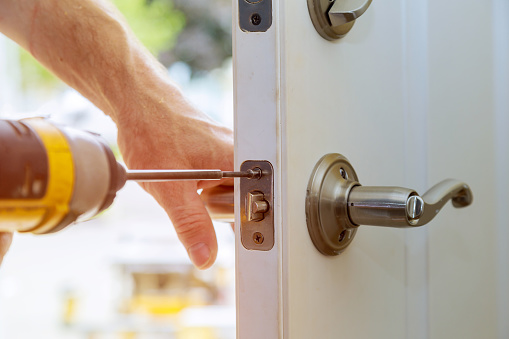
8. Change Locks When You Lose a Key and When Moving Into a New Place

“The need for top-notch security at home is obvious. You and your loved ones spend a great deal of time there, and your valuable possessions are there regardless of whether you’re home or not. When something or someone is important, you do what you can to provide protection. Whether you’ve lost a key or you just bought the place, changing the locks needs to be a top priority. This ensures no one has access to your home unless you want them to have access. 

“You never know who or how many people the previous owners might have given a key to but never asked for it back, so make sure you install new door knobs, handlesets, and deadbolts as soon as possible once you move in. You should also make sure all exterior doors have a deadbolt. It’s one thing to lock the handle or knob, but a deadbolt will offer you much more security. They’re designed to be a physical security feature in the face of attempted forced entry.”

Richard Schoech, Owner of Door Locks Direct

9. Install Adequate Lighting

“Intruders and other outside threats will find it difficult to plot an assault if your home is well-lit. For starters, if your home lacks dark spots where they may temporarily hide, they will be discouraged from ever attempting to do so. Second, a well-lit residence implies you’ll be able to notice whether there’s anyone or anything unusual in your immediate surroundings. Finally, lights allow people on the outside to see what is going on inside your home, allowing them to call for help if necessary.” (Kris Lippi)

10. Invest In Glass Break Sensors

“Glass break sensors monitor sound and vibrations which the act of someone breaking glass produces. They sound an alarm once the proper conditions are met, alerting you immediately should someone attempt a break-in by shattering glass in either your windows or your doors.”

Kris Lippi, Real Estate Broker CEO ISoldMyHouse

11. Keep Your Locks Up To Date At All Times

“Conduct regular inspections of the locks in your home. Look for broken locks and if there are outside locks that are easy to pick or break. If you come across locks that fulfill those requirements, make sure to replace them right away. Along with your locks, it’s also a good idea to strengthen your doors and windows. If you discover that parts of your external doors are thin or damaged, consider replacing them or installing additional reinforcements such as a door barrier or a security bar. Consider also installing locks to your windows to secure your house further.”

David Bitton, Co-founder & CMO DoorLoop

18 Tips To Secure Your Home For Little Children

With little kids in the house, parents are forever looking out for what can harm them and the ‘search, find and secure’ circle is endless. Each time you secure something., your smart little one will have found something else risky for themselves.

To help you along the way, we talked to the experts and compiled some great tips that can help you secure your house more effectively for your child. While the list of things you need to look out for may seem endless, our list will simplify it a little.

1. Cover Electrical Outlets

“First, childproof your house before you start leaving the kids home alone by covering electrical outlets, putting child safety locks on the stove, and any cabinets with chemicals, medication, or alcohol. Also, put child safety gates in front of doorways and stairs for toddlers.” (Harriet Chan)

2. Use Non-Skid Mats

“Ensure to use non-skid bath mats on the bathroom floor and in the bathtubs to prevent children from falling, drowning, or other serious injuries.” (Harriet Chan)

3. Strap Them In

“Always strap your kid in if they use high chairs to avoid falls.” (Harriet Chan)

4. Avoid Using Table Cloths

“When serving meals at the dining table, avoid using table cloths because young kids can grab them and pull dishes or other items onto their tiny heads.”

Harriet Chan, Co-Founder of CocoFinder

“Children are naturally curious and that is one factor that makes them vulnerable to accidents. It’s hard to completely childproof a home, but there are things that can be done to protect children as efficiently as possible.” (Lynda Le)

5. Cover Danger Points

“Make it a habit to cover possible items that pose a danger like outlets, hot pipes, and windows, to prevent falls.” (Lynda Le)

6. Put Thing out of Reach

“Also, put things away so they are out of reach of children. Place them in childproof cabinets with locks to prevent injuries and possible poisoning.” (Lynda Le)

7. Beware of Choking Hazards and Chemicals

“Pay attention to small items which can cause choking, as well as chemicals and medications which can cause poisoning, and drawstring that may strangle them, and etc.  Special attention must be provided especially if there are little ones at home. It is the children’s right to be safe and the parent’s responsibility to keep them safe.”

Lynda Le, Nail Technician and Founder of Polish Perfect

8. Go Through the House and Find Potential Dangers

“Having children at home is a constant learning experience. As an expert on home spaces, no matter how prepared you are, you will always discover something new that could potentially harm your little one. The best way to childproof your home is to go through your home and see what your child can potentially reach once they walk. During the younger years, make use of bay enclosures to prevent them wandering off to possibly dangerous rooms such as the laundry or kitchen.”

James Kalim, Founder and CEO at Only Silent

9. Beware of Poisoning Products

“Since the main cause of unintentional injury deaths in the home is poisoning, ensure safety for young children by keeping your cleaning products and your medications in areas that children cannot easily reach. If that is not possible, consider installing locks on medicine cabinets and areas of the house that could be dangerous for young children.” (Karen Condor)

10. Kitchen Safety

“Decrease the chances of the kitchen being a dangerous place for young children by keeping sharp kitchen tools away in cabinets instead of in countertop displays. Turn pot and pan handles away from the edge of the stove so they don’t accidentally get knocked off, store breakable dinnerware beyond a child’s reach, keep non-breakable drinkware and plates within easy reach for children, and make sure your appliances are secure so they don’t tip over.” (Karen Condor)

11. Install Smoke Alarms

“To better secure your home for little children, install smoke alarms inside each child’s bedroom and outside the sleeping areas in every level of the home, including the basement. Create a fire escape plan and run a fire drill with your children twice a year.

Karen Condor is a home safety expert with USInsuranceAgents.com

12. Fence Around the Pool

“If you have a pool, build a small fence around it: You’ll never know when your toddler suddenly decides to wander around your backyard. She can easily fall into the pool without you knowing it. Ward off this very preventable accident by putting around a small fence either around it or in front of the pathway towards it.” (Jack Miller)

13. Safety with Devices

“Monitor their internet surfing activities: The internet is a vast place where age-sensitive content can easily be accessed by your youngsters. Monitor their online activities by limiting them to child-friendly content. If necessary, bar them from seeing any social media until they reach a certain age. Fortunately, there is a platform like YouTube kids to keep them entertained in that way.”  (Jack Miller)

14. Childproof Everything

“Cabinets with hazardous chemicals and sharp tools should be protected with safety locks. The same goes with electrical outlets, which you should cover-up. If you want to be extra safe, equip your stove with a child lock as well.”

Jack Miller is the founder of How I Get Rid Of

15. Anchor Large Items

“One of the most important things to do when childproofing your house is to anchor large items.  I have caught my kids so many times climbing their bureaus. If they grab it at just the right angle, it could easily fall on them if it isn’t properly secured to the wall.”

Stephanie Eddy is a parenting and motherhood blogger at Dresses and Dinosaurs

16. Anchor Furniture to the Wall

“Making a home safe for small children is a crucial aspect of being a good parent, which is why homeowners who are also parents prioritize this. To do so, a good place to start is with furniture, particularly furniture in their bedroom. By anchoring furniture to your walls, you can prevent it from toppling over and falling on your youngster.” (Kris Lippi)

17. Secure Sharp Edges

“Next, secure all sharp edges in your home with protective coverings so that children do not injure themselves if they come into contact with them.” (Kris Lippi)

18. Discreet Safety Socket Covers

“Finally, to avoid drawing attention from children, keep your electrical outlets covered with discreet-colored safety socket covers.”

Kris Lippi, Real Estate Broker, CEO ISoldMyHouse